
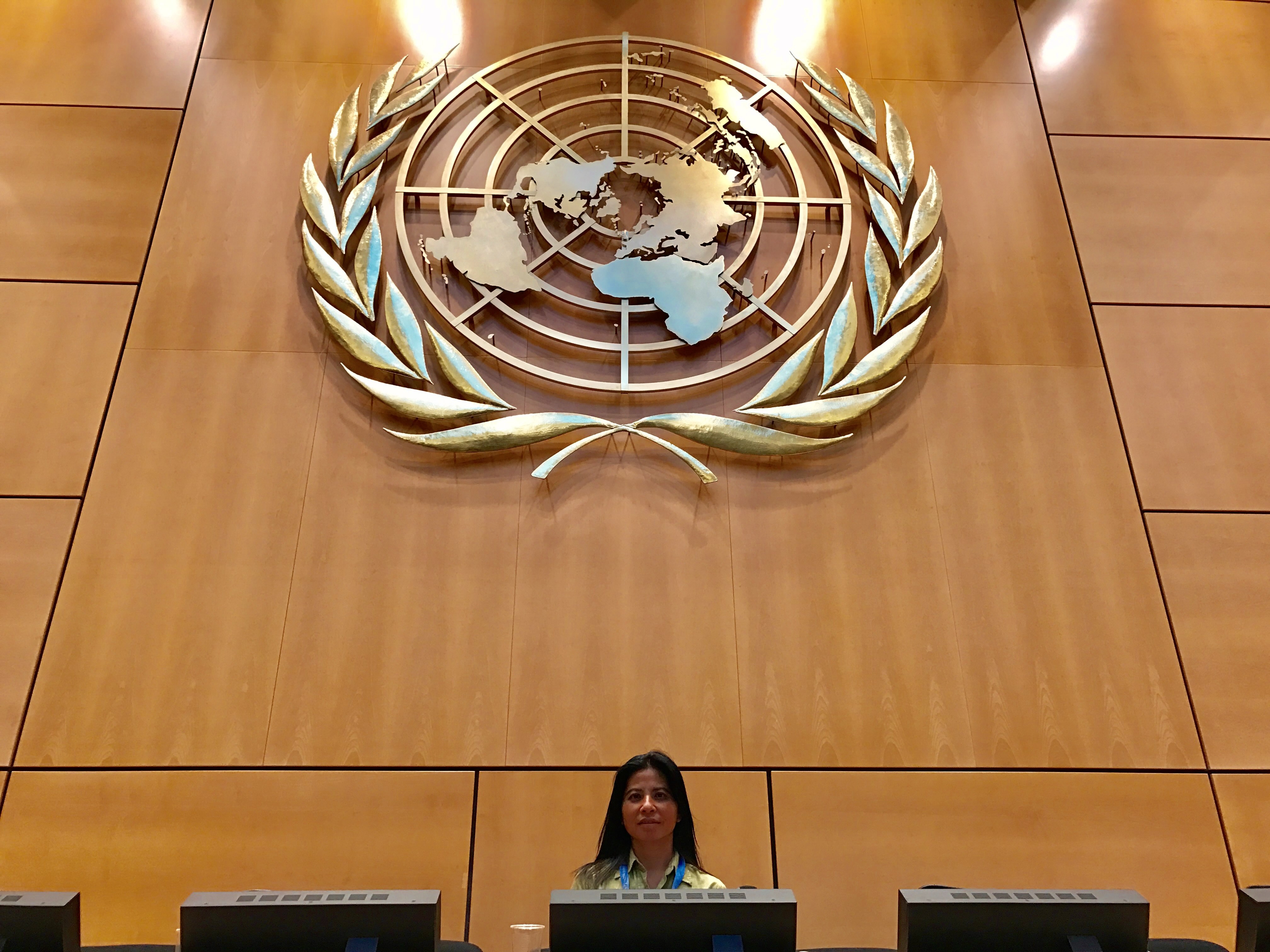
The activities of the Diplomatic Council (DC) in the field of artificial intelligence (AI) are attracting considerable attention worldwide. The United Nations has now invited the DC to present its AI expertise at the annual meeting of the UN Commission on Science and Technology for Development (CSTD) in Geneva. The Diplomatic Council is therefore proud to host an official UN Side Event on 22 April (9:00–9:55 a.m.) at the Palais des Nations, the historic European headquarters of the United Nations in Geneva.
FURTHER INFORMATIONEN AND REGISTRATION
The breadth and depth of the impact of artificial intelligence are still widely underestimated. In many discussions, AI is framed primarily as a set of digital tools such as chatbots, automation systems, or data analytics. In reality, it is rapidly evolving into a foundational technology that will influence virtually every sector of society. For governments and international institutions, this transformation will affect economic structures, labour markets, public administration, security, education, and scientific research alike. Much like electricity or the internet in earlier eras, AI will not remain confined to specific applications but will increasingly permeate the systems through which information, decisions, and services are produced.
At the same time, a new phase of development is emerging: the transition from purely digital AI to what is often called real-world AI or physical AI. In this phase, artificial intelligence no longer operates only in software systems but becomes embedded in machines, infrastructure, and physical environments. Autonomous vehicles, intelligent robots, adaptive manufacturing systems, smart energy networks, and AI-guided medical technologies are early examples of this shift. As AI increasingly interacts with the physical world, its influence will extend far beyond data processing and into the organisation of production, mobility, logistics, and critical infrastructure.
The central challenge is therefore not simply how to regulate a digital technology, but how to understand and shape a transformation that will affect both the digital and the physical foundations of our societies. The convergence of AI with robotics, sensors, and connected infrastructure will redefine economic competitiveness, national resilience, and international cooperation in the decades ahead.
In this presentation, the experts will explain in clear and accessible terms the various fields of application and the broader implications of artificial intelligence. Particular attention will be given to the following aspects:
• The use of AI to improve medical care in both less developed and highly developed countries.
• The role of AI in agriculture to enhance food production and improve food security, particularly in underserved regions.
• The enormous impact of the convergence of AI and robotics.
• The impact of AI-driven developments on national tax systems and social security structures.
• The contribution of AI to more efficient public administration and evidence-based policy-making.
• The growing importance of AI for education and workforce development in an increasingly technology-driven global economy.
• The implications of AI for international cooperation, including standards, governance, and responsible innovation.
• The impact of AI on the work of governments, including policy design, public service delivery, and strategic decision-making.
• The role of AI in the development of smart cities. As urbanisation accelerates and a growing share of the world’s population lives in cities, AI will play a crucial role in managing infrastructure, mobility, energy systems, environmental monitoring, and public services in increasingly complex urban environments.
Speakers:
Hang Nguyen, Secretary General Diplomatic Council, Moderator
Andreas Dripke, Executive Chairman of the Diplomatic Council, has been working on artificial intelligence for more than a decade and has written and contributed to major standard works on the topic, including “AI for Decision Makers” and “2045 – The Year AI Becomes Smarter Than Humans.”
Dr. Daniel Trauth, Founder dataMatters GmbH and Co-Chair Real-world AI Forum of the Diplomatic Council, has developed the world first Smart City Operating System (urbanOS) incorporating AI to address the challenges created by rapidly growing urban populations and ever larger metropolitan areas.
Important note: Registration for the DC event does not entitle you to participate in the CSTD; this must be applied for separately at the UN. DC members are welcome to contact the General Secretariat of the Diplomatic Council for further information.